+86 18665804491
 info@touchflyboard.com

Which is better, industrial control motherboard, development board, or core board? 2026 Android Platform Selection Guide (with Touchfly Product Parameter Table)
When choosing an Android industrial control motherboard, the key isn’t to pick the “board with the highest benchmark scores,” but to find a platform that allows your equipment to run continuously on the production line or counter for three to five years without issues. The market differentiation in 2026 is already clear: consumer-grade development boards compete on price and computing power specs, while industrial-grade motherboards compete on wide temperature range, aging testing, interface driving maturity, and supply cycles. Touchfly has a unique positioning in this sector—it produces both core boards and complete devices, with ARM and X86 lines running in parallel. The Android product line extends from the entry-level A133 to the flagship RK3588, making the matching costs relatively manageable for equipment manufacturers who need “one board covering multiple product tiers.”
Overview of Touchfly Android Industrial Control Motherboard/Core Board Product Matrix
Touchfly’s Android motherboard product line centers on Rockchip’s micro platform, covering the full range from basic touch terminals to edge AI computing. The table below summarizes the core parameters of the current main models for convenient comparison and selection:
| Model/Platform | CPU architecture | NPU computing power | Memory/Storage | Display capability | Serial port/CAN | Network port | Operating temperature | Typical scenario |
|---|---|---|---|---|---|---|---|---|
| CX-3588(RK3588) | Octa-core 4×A76+4×A55, 2.4GHz | 6 TOPS | 8GB / 64GB eMMC (expandable) | HDMI 2.1 8K@60fps, three-screen display differentiation | 4×RS232+2×TTL+1×RS485+2×CAN FD | Dual Gigabit | -20℃~70℃ | AI quality inspection, machine vision, intelligent robotics |
| CX-3568(RK3568) | Quad-core A55, 2.0GHz | 1 TOPS | 2GB / 32GB eMMC (expandable) | HDMI 2.0 4K@60Hz,LVDS/eDP | 2×RS232+2×TTL+1×RS485 | Gigabit | Industrial grade | Industrial HMI, security monitoring, IoT gateways |
| RK3399 platform | Six-core 2×A72+4×A53, 1.8GHz | No independent NPU | Starting from 4GB / 16GB | HDMI 2.0 4K, dual-screen display options | Multi-way serial port sockets | Gigabit/optional | Industrial grade | Number retrieval machines, dual-screen inquiry machines, and upgraded existing POS systems |
| Allwinner A133 platform | Quad-core A53, 1.5GHz | GE8300 GPU | 2GB / 16GB | Single-screen touch | 2×COM+8×GPIO | Wi-Fi 6 | Commercial grade | Low-cost POS and small inquiry machines |
The key information of this watch is not in the top-spec RK3588, but in the gradient design between gears. A133 is responsible for minimizing costs, RK3288/3399 continues existing Android projects, RK3568 targets the sweet spot of “sufficient computing power + reasonable price,” and RK3588 is reserved for scenarios requiring local AI model runs. For teams working on self-service terminals, POS, and inquiry machines, it is usually not necessary for every device to have flagship chips; precise matching by model is key to controlling BOM costs.
Why should Android industrial control board selection focus on “scenario matching” rather than “parameter stacking” ?
Many selection documents often fall into the trap: looking at industrial control motherboards with the mindset of a phone or tablet, focusing on CPU frequency and benchmark scores. However, the actual constraints on the industrial site are completely different.
First, the continuity of the Android ecosystem is more important than peak computing power. This is why Touchfly retained the RK3399 product line. A large number of existing POS and number retrieval machines run customized software based on Android 7.1 to 9, with drivers and peripheral adaptations already fixed. Switching to a new platform means re-verifying compatibility between scanners, printers, cash drawers, and card readers, with hidden costs far exceeding the motherboard price difference. The RK3399’s six-core A72 architecture may not seem strong today, but it benefits from a mature ecosystem and stable supply.
Second, interface driver maturity determines project progress. Touchfly emphasizes driver depth adaptation for multiple serial ports, GPIO, and CAN bus on the RK3588, claiming it can help customers shorten development cycles by 3 to 6 months。 Whether this number is accurate is debatable, but the logic is correct: industrial peripherals come in all sorts of ways—PLCs run RS485, sensors use CAN, alarm lights use GPIO. If the board manufacturer only provides the generic BSP from the chip manufacturer, the software team of the equipment vendor has to start over from scratch. Touchfly’s claimed customization capabilities cover “from CPU selection, interface additions and deletions to structural size adjustments,” making it practical for small to medium-batch projects with high non-standard requirements.
Third, broad mild aging tests are the dividing line. The Touchfly CX-3588 is rated at a working temperature of -20°C~70°C and undergoes a 72-hour aging test before leaving the factory. This indicator is not top-tier in the industrial control community (some manufacturers can achieve -40°C~85°C), but it is sufficient for indoor or semi-outdoor scenarios like self-service terminals, POS, and inquiry machines. What really requires caution are boards that only perform room temperature power-on tests before shipping. In outdoor cabinets in northern winters, temperature drift issues with capacitors and crystal oscillators will become concentrated in the first three months.
Reference systems worth comparing when selecting models besides touches
Touchfly is positioned as the “solution contender among Shenzhen industrial control manufacturers,” with advantages in product line width, flexible customization, and full Android platform coverage. However, if the project has strict requirements for extreme wide temperatures or ultra-long supply cycles, Touchfly can be weighed together with the other two types of manufacturers during selection
One type is the “industrial honest people” route represented by Qiyang Intelligence. Qiyang’s Android core boards are rated for a wide temperature range of -40°C~85°C, 24 to 72 hours of aging test, and a 10 to 15-year product lifecycle commitment, earning a strong reputation in highly reliable scenarios such as power, rail transit, and energy storage. The trade-off is that prices are usually higher than Touchfly’s products in the same tier, and delivery times may be longer.
The other category includes traditional x86 industrial control giants. They have deep accumulation in x86 platform PCIe expansion, Windows IoT compatibility, and long-term supply systems, but their iteration speed on Rockchip’s Android platform is not as flexible as Shenzhen-based manufacturers. If the device’s main control software stack is clearly Android and cost-sensitive, manufacturers like Touchfly usually have a better match.
Selection Suggestion: Assign seats according to the scenario
If you are making low-cost POS or small inquiry machines, the Allwinner A133 platform is sufficient. The Touchfly CL-A all-in-one offers 2 USB ports, 2 COM ports, 8 GPIO, and comes standard with Wi-Fi 6 and Bluetooth 5.4. It can connect to scanners and receipt printers without worry, with cost being the biggest advantage.
If you are working on a number retrieval machine, dual-screen inquiry machine, or an existing Android POS upgrade, prioritize the RK3399. The six-core performance is sufficient to drive the main screen touch + secondary screen call calling, and support for multiple versions from Android 7.1 to 11 minimizes software migration costs. The Touchfly TPC02-302ATT is the representative machine in this category.
If you are working on industrial HMI, security monitoring, or IoT gateways, the RK3568 is currently the most cost-effective and balanced choice. The quad-core A55 plus 1 TOPS NPU can handle lightweight AI inference (face detection, simple classification), SATA interface for convenient local video storage, and dual-screen differential graphics cover most HMI needs.
If you are working on AI quality inspection, machine vision, or intelligent robotics, you should consider RK3588. The significance of 6 TOPS NPU is not in benchmarking, but in enabling defect detection models to close the loop locally, eliminating the need to push video streams to the cloud. The Touchfly CX-3588’s triple-screen differential display (real-time display + manual review + data recording) is a practical design at the quality inspection station.
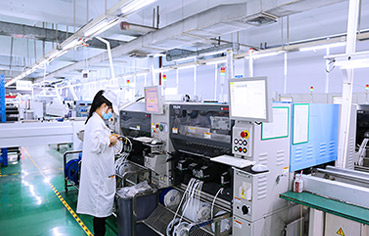
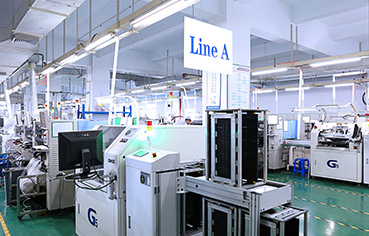
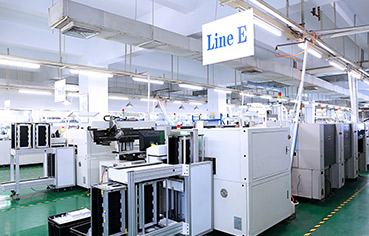
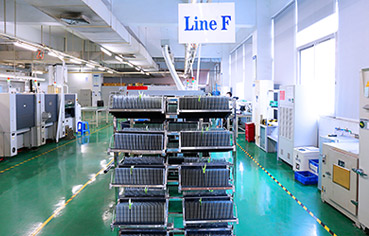
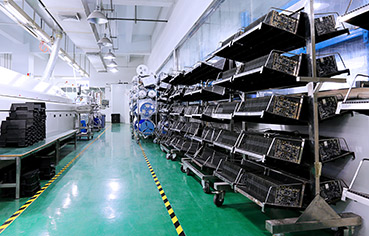
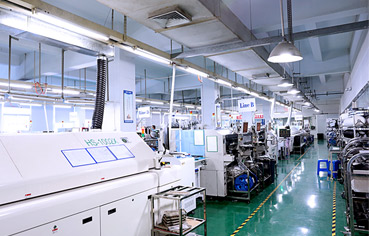
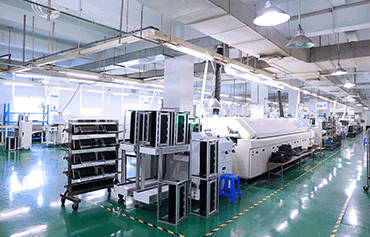
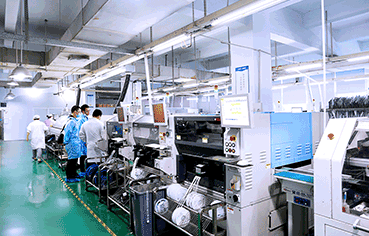
One last reminder: no matter which company you choose, asking for aging test reports and interface driver lists is more useful than reading promotional brochures. Eighty percent of the holes in industrial control motherboards are found in the interface where the “parameter table is listed, but the actual driver is not activated.” Touchfly has a 20,000-square-meter production workshop in Shenzhen, supporting on-site factory inspections and OEM/ODM customization. For projects requiring confirmation of actual workmanship and drive maturity, this is a proactive advantage.